Town of Sterzing - Historical Buildings
Hospice, Religious Seat and Cultural Centre of Sterzing
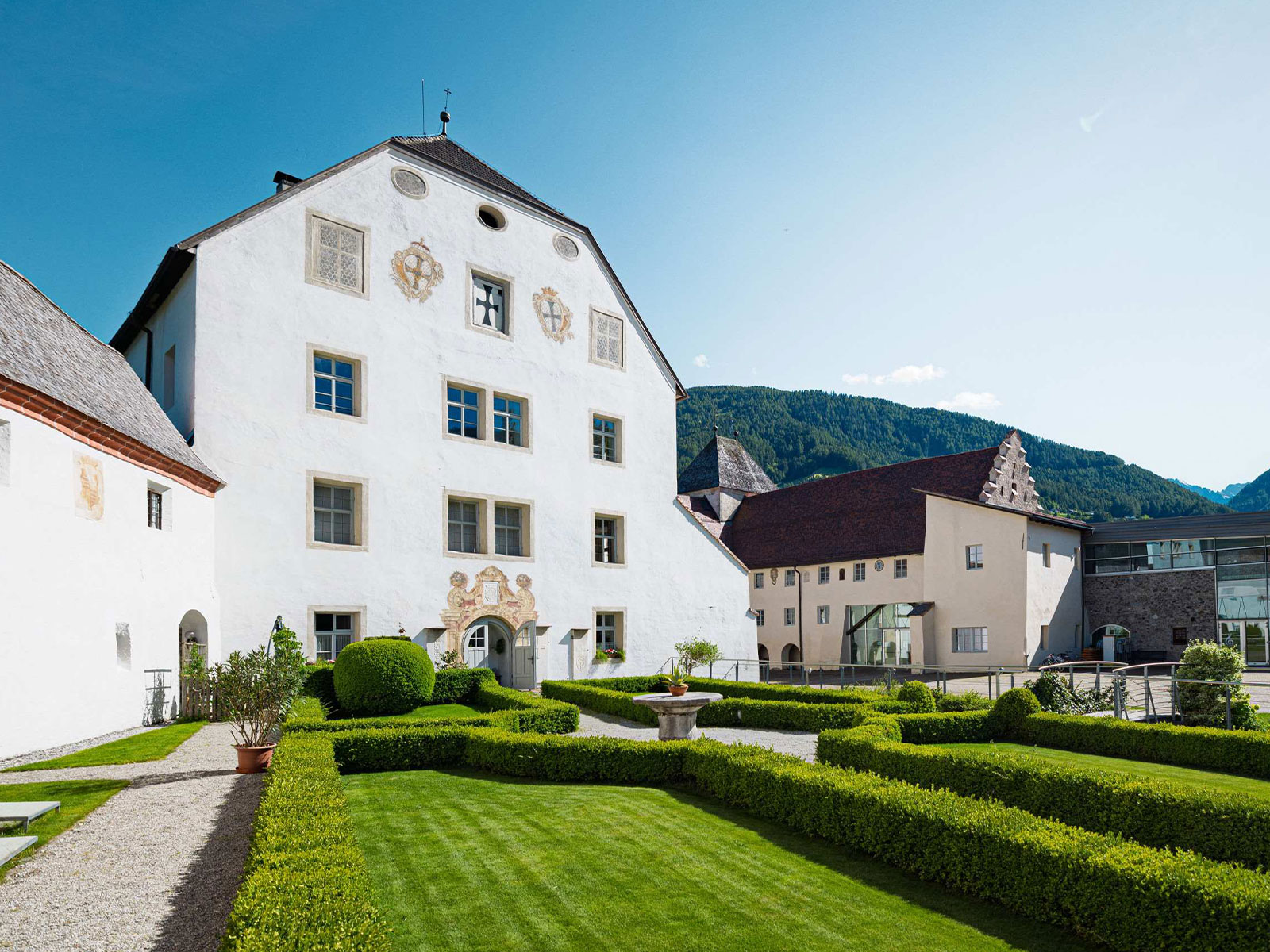
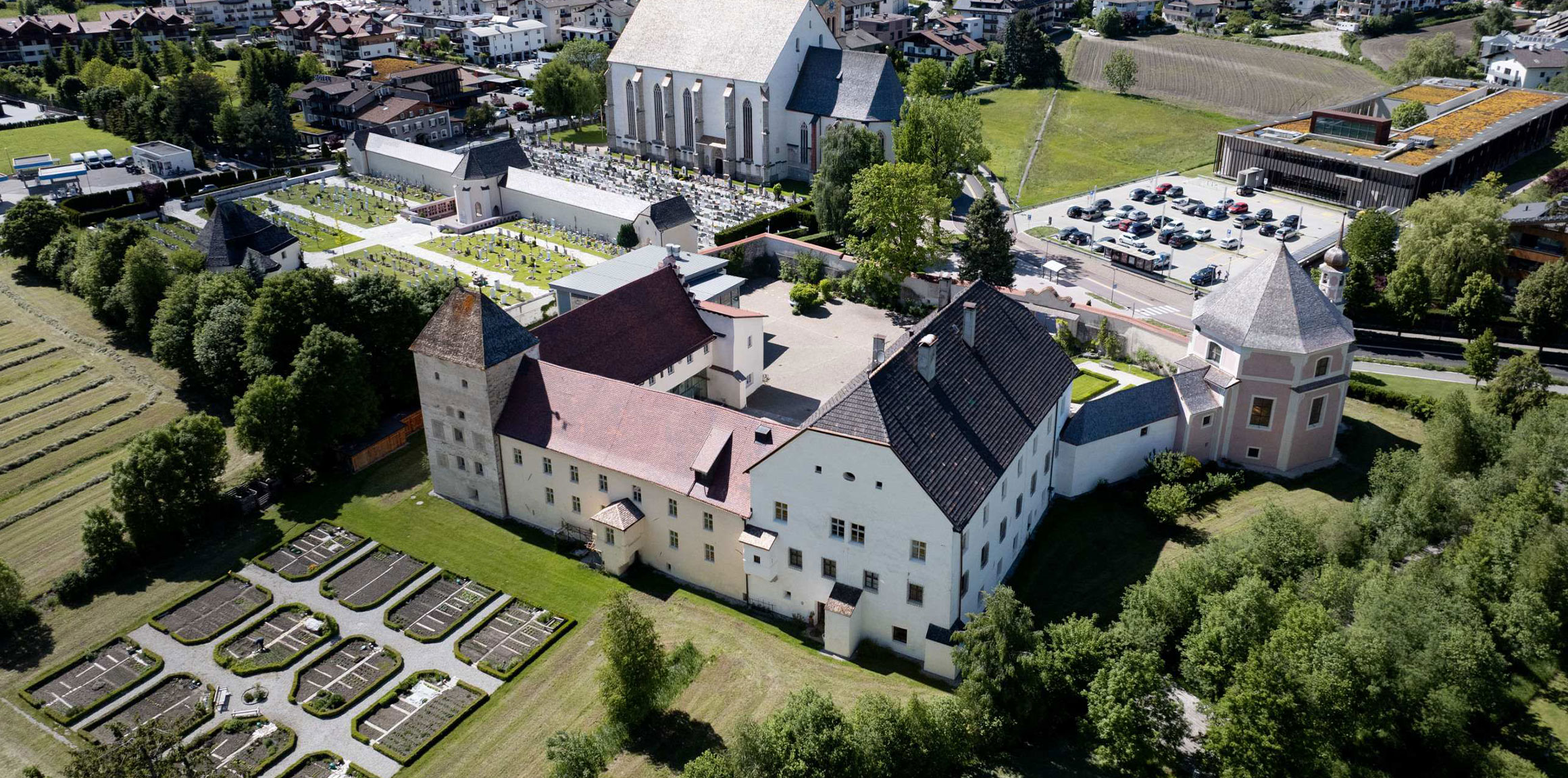
Beside the Parish Church “Our Lady in the Moor” stands the historic Teutonic Order House, one of Sterzing’s most significant historical complexes. Over the centuries, the building served as a hospice, a seat of the Teutonic Order, a hospital and later as an important cultural centre of the town. Even today, the complex reflects Sterzing’s historical importance along the ancient Brenner route.
A hospice for pilgrims, travellers and the sick already existed here in 1241. In 1254, the property was transferred to the Teutonic Order, which established a regional administrative seat, known as a commandery, within the complex. Along the major trade and pilgrimage routes, the Teutonic Order played an important religious and social role by offering shelter, care and protection to travellers.
The different parts of the building were constructed over several centuries. The core of the eastern wing dates back to the mid-13th century. In the 14th century, the southern tower and additional structures were added. During the second half of the 15th century, the complex received its characteristic Late Gothic appearance with stepped gables and inner courtyards. In the 18th century, parts of the building were redesigned in Baroque style with new façades.
Between 1821 and 1884, the building belonged to the Counts of Thurn and Taxis. Afterwards, it served for almost a century as the town hospital and later as the district hospital, thus continuing its original role as a place of care and assistance.
Today, the carefully restored complex houses several important cultural institutions of Sterzing, including the music school, the town orchestra and the Multscher and Town Museum.
Particularly important is the Multscher Museum, located within the historic rooms of the Teutonic Order House. The museum is dedicated to the famous Late Gothic artist Hans Multscher and preserves the surviving parts of the renowned Multscher Altarpiece, created between 1456 and 1459 for the Parish Church “Our Lady in the Moor”. The altarpiece is regarded as one of the most important works of Late Gothic art in the South Tyrolean region and marks the transition from medieval art to the early Renaissance. Its expressive sculptures and painted panels still demonstrate the remarkable artistic mastery of that era.
In addition to the altarpiece, the museum presents numerous exhibits related to Sterzing’s town history, sacred art and the region’s mining and trading traditions. In this way, the Teutonic Order House uniquely combines religious history, art, social care and urban culture.
Today, the Teutonic Order House remains one of Sterzing’s most important historical landmarks. Its walls tell the story of medieval pilgrims, the work of the Teutonic Order, centuries of care and hospitality, as well as the artistic and cultural heritage that shaped Sterzing as a bridge between northern and southern Europe.