Monumental Late Gothic Church on the Outskirts of Sterzing
Just south of Sterzing’s historic old town rises the Parish Church “Our Lady in the Moor”, one of South Tyrol’s most important sacred buildings and one of the largest Late Gothic hall churches in the Alpine region. Its extraordinary dimensions still reflect the wealth and importance Sterzing achieved during the flourishing trade period of the late Middle Ages.
The church was built outside the medieval town walls beside the former Teutonic Order house. For centuries, pilgrims, travellers and the sick who journeyed along the important Brenner route were cared for here. The location therefore highlights Sterzing’s historical role as a major crossroads between northern and southern Europe.
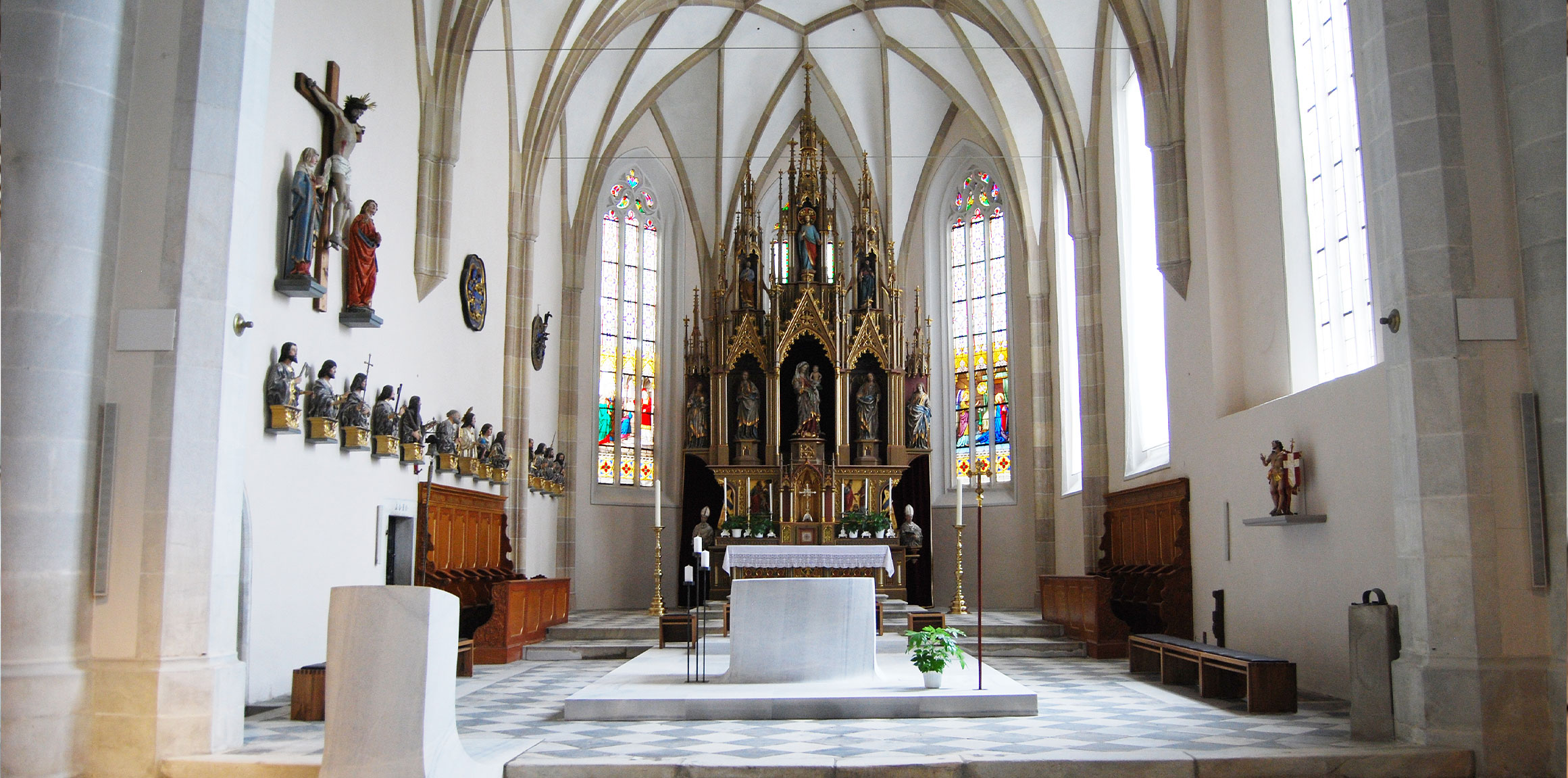
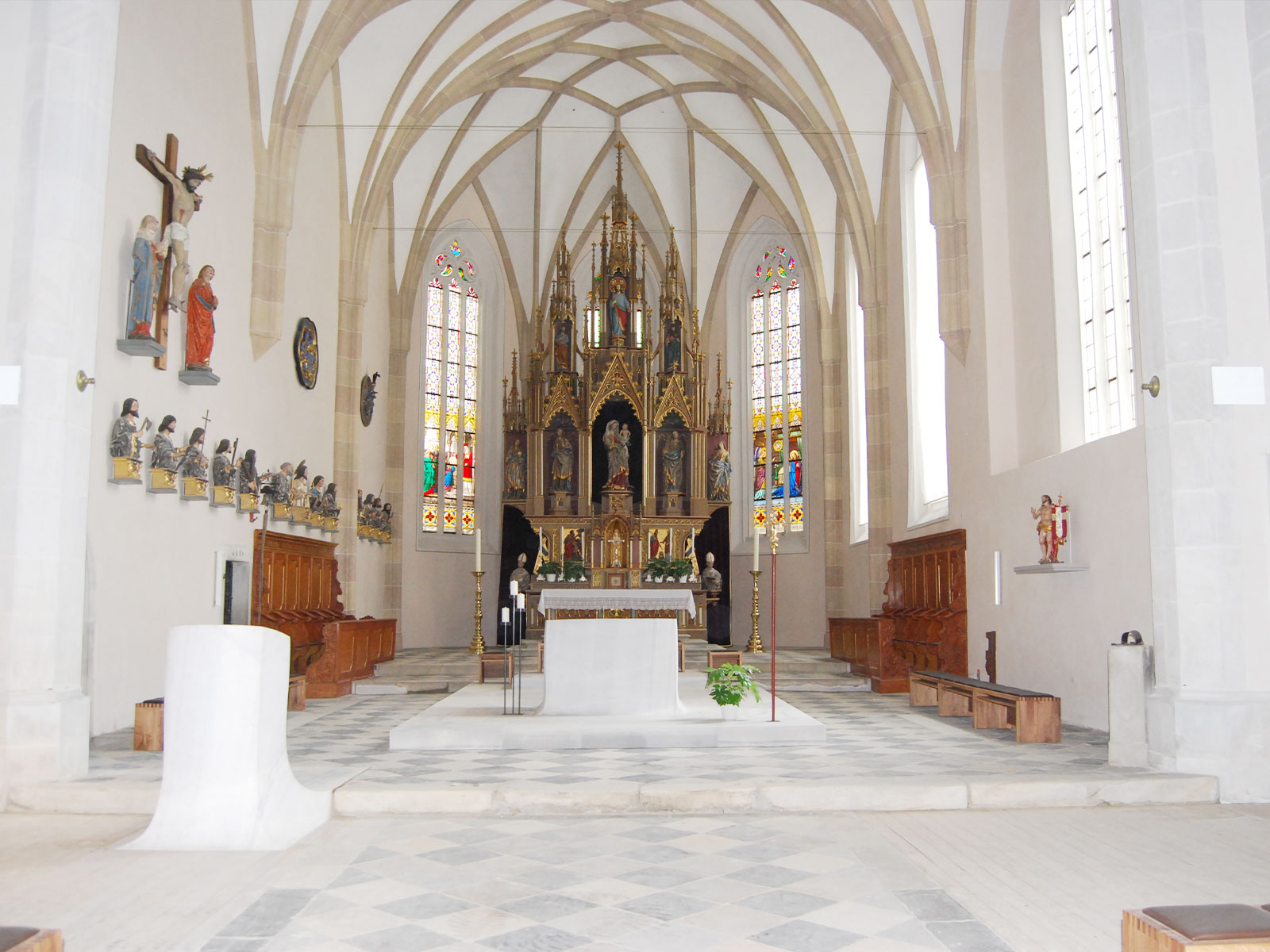
Construction of the present church took place in several phases. The choir dates back to the early 15th century, while work on the monumental three-aisled nave began in 1497. According to tradition, Emperor Maximilian I personally attended the laying of the foundation stone, underlining the city’s importance within Tyrol at that time. By the early 16th century, a monumental Gothic church of remarkable scale and architectural clarity had emerged here.
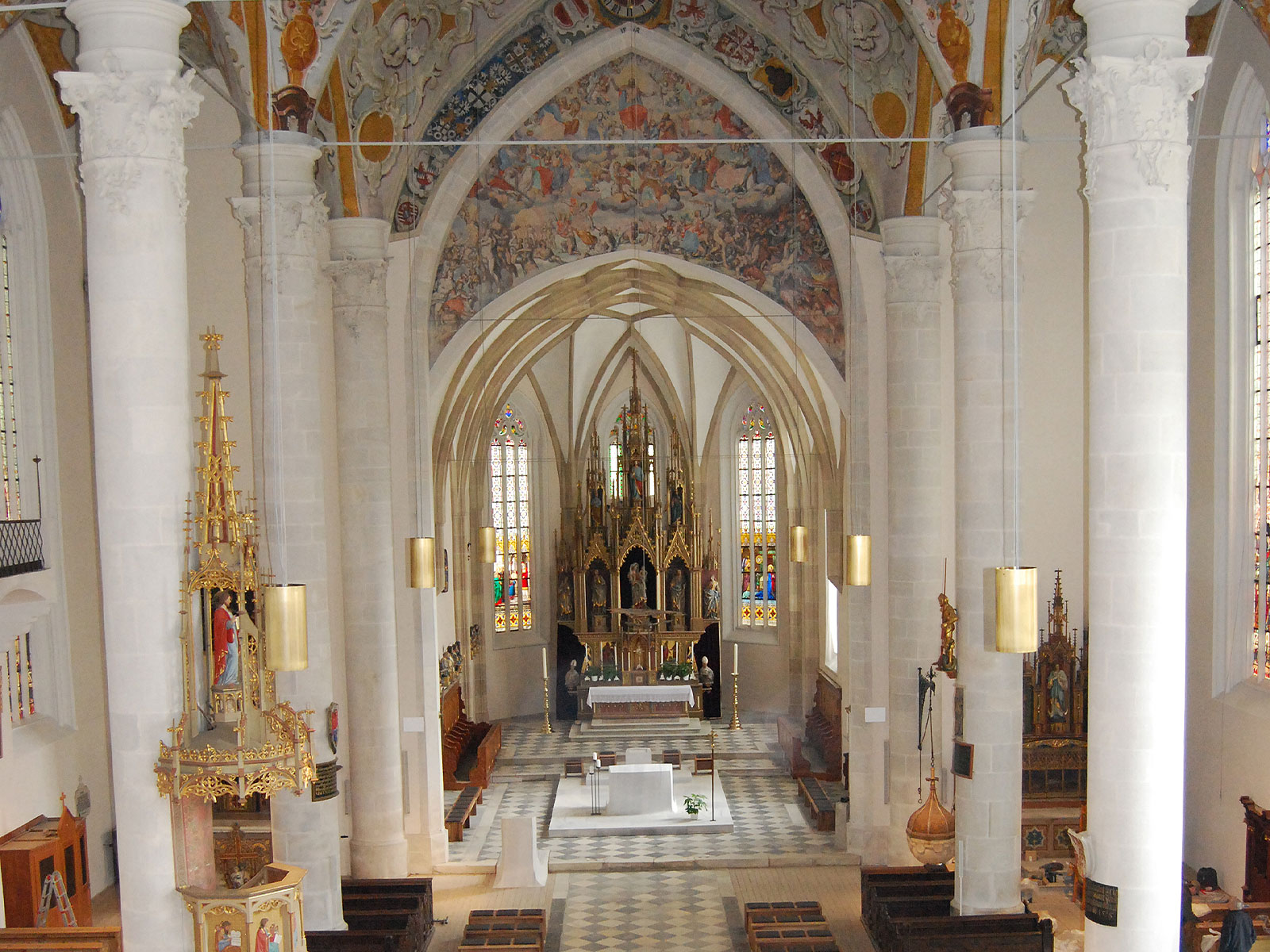
The interior is especially impressive for its brightness and spaciousness. High vaults rest upon massive marble columns, creating an atmosphere of harmony and solemn grandeur. The Late Gothic architecture combines monumentality with elegance and is regarded as one of the finest achievements of Tyrolean craftsmanship.
Among the church’s greatest artistic treasures is the famous Multscher Altarpiece, created between 1456 and 1459 by the master sculptor Hans Multscher of Ulm. This masterpiece is considered one of the most important works of Late Gothic art in the South Tyrolean region and marks the transition from medieval art to the early Renaissance. Large parts of the original altarpiece are now preserved in the nearby Multscher and Town Museum in the Deutschhaus.
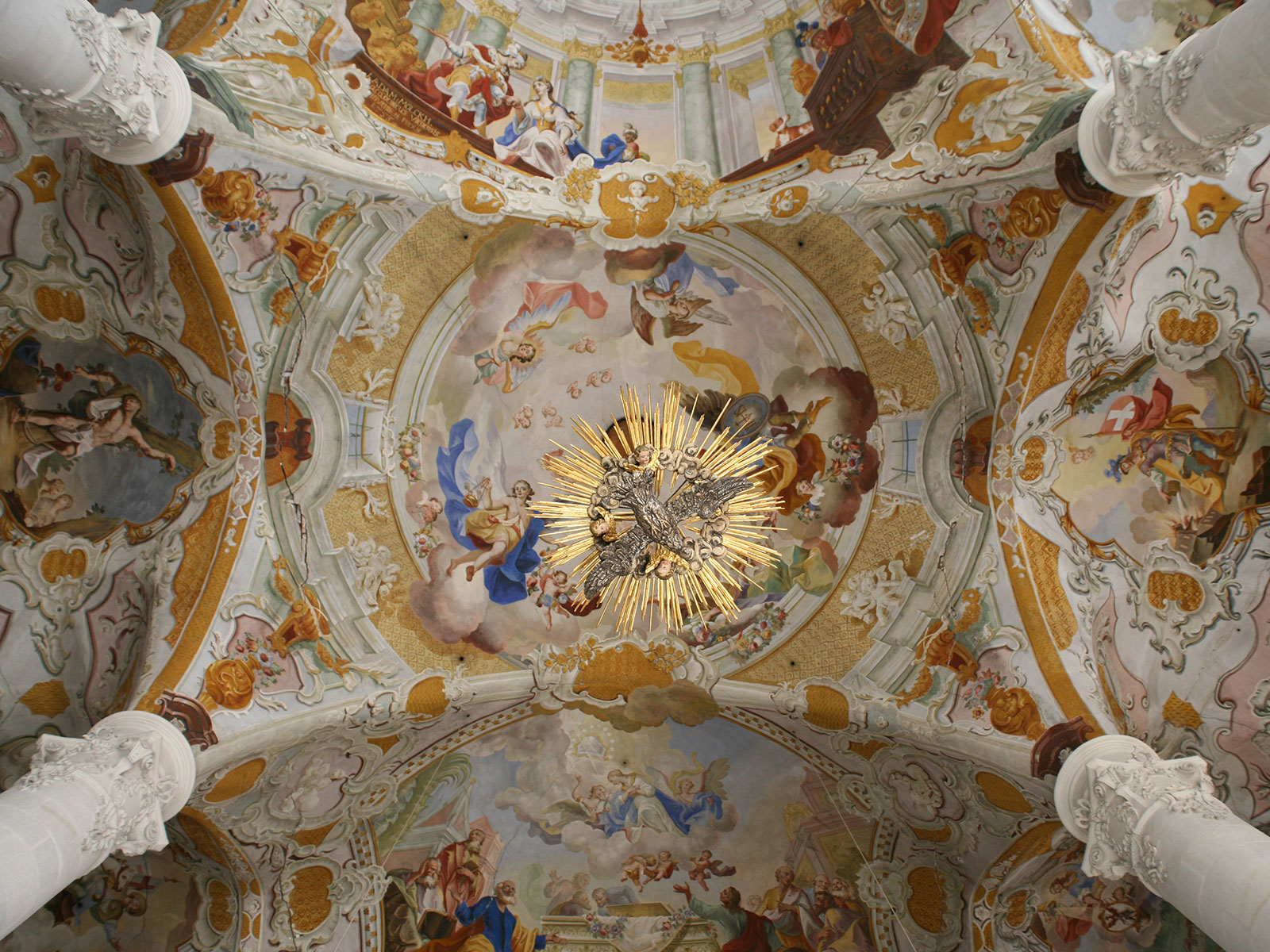
Later centuries also left their mark on the church. In the 18th century, Baroque ceiling frescoes were added, bringing warmth and festive splendour to the otherwise austere Gothic interior. Elaborate altars, memorials and numerous artistic details continue to reflect Sterzing’s rich religious and cultural history.
The Parish Church “Our Lady in the Moor” is therefore far more than a place of worship. It tells the story of Sterzing’s golden age, of trade and pilgrimage along the Brenner route, of Emperor Maximilian I’s influence, and of the remarkable artistic achievements of Late Gothic builders and craftsmen. To this day, it remains one of the city’s most important historical landmarks.