A Baroque Jewel of Art and Spirituality
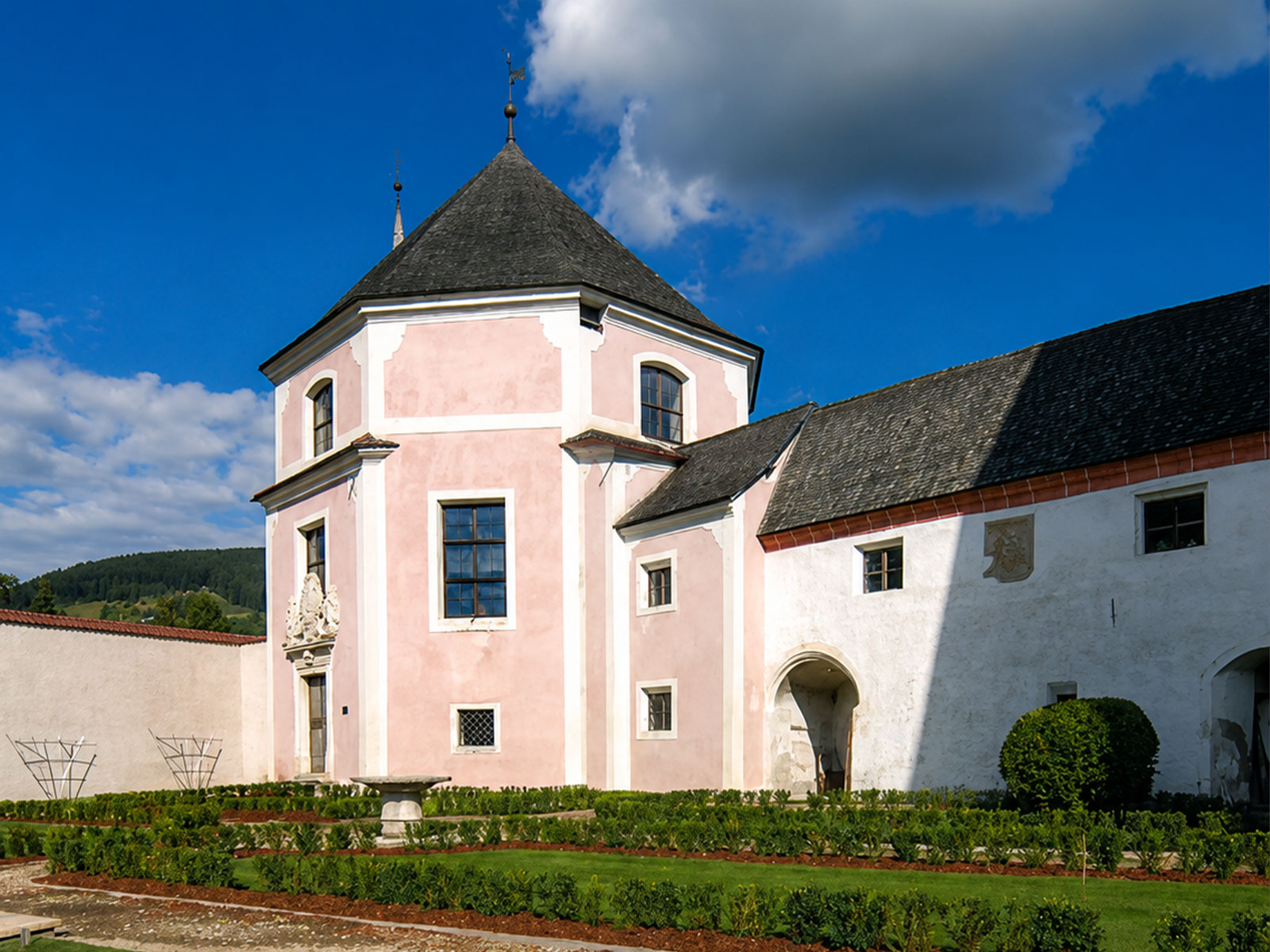
Within the historic Teutonic Order House stands St. Elisabeth Church, one of the most elegant Baroque sacred buildings in Sterzing. The church beautifully combines art, architecture and religious history, reflecting the centuries-long presence of the Teutonic Order in the town.
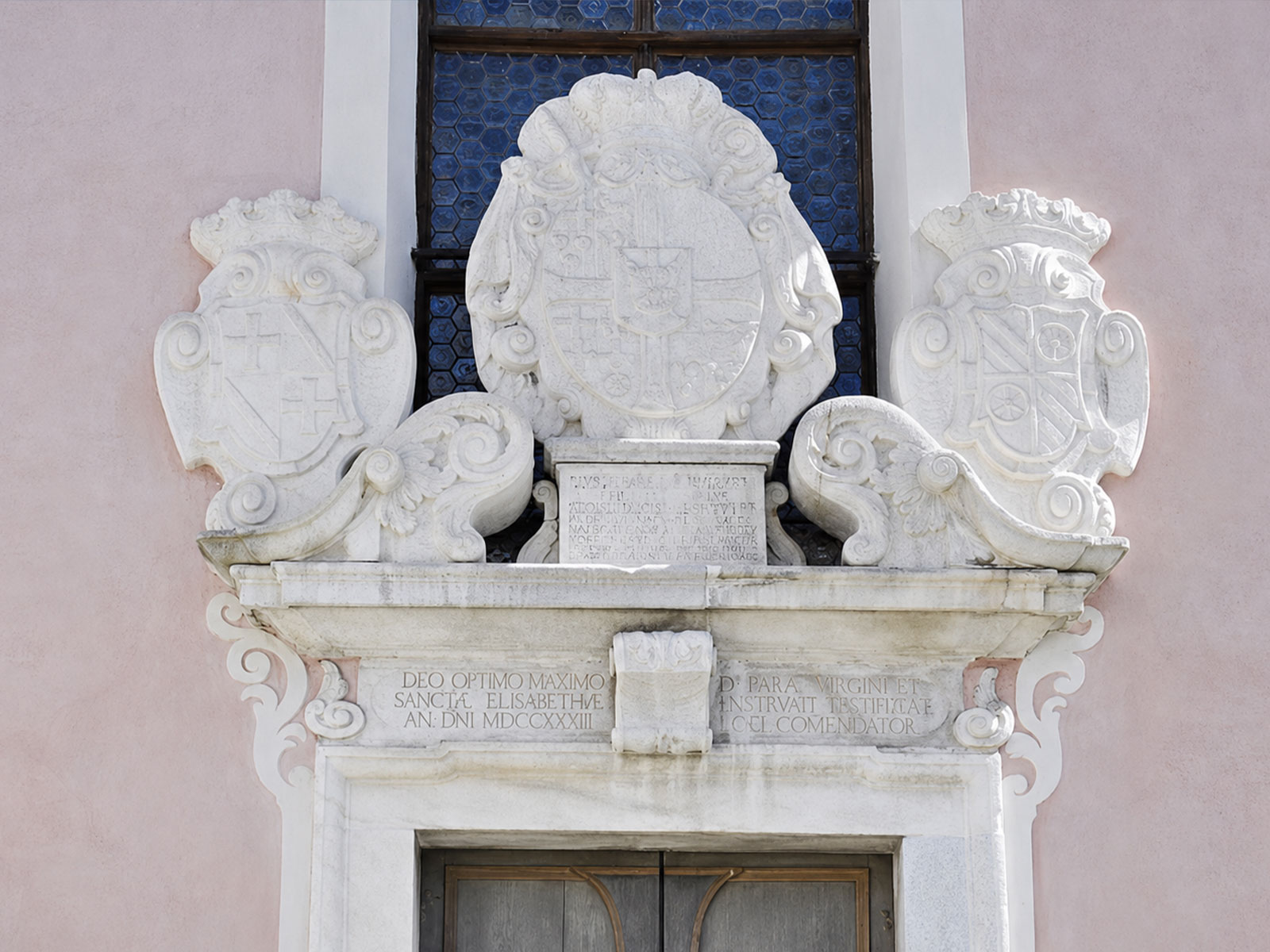
An earlier chapel belonging to the Order once occupied this site. Between 1729 and 1733, the present church was built according to plans by the architect Giuseppe Delai. Particularly striking is its octagonal floor plan, an unusual architectural form in South Tyrol that gives the interior a remarkable sense of harmony and balance.
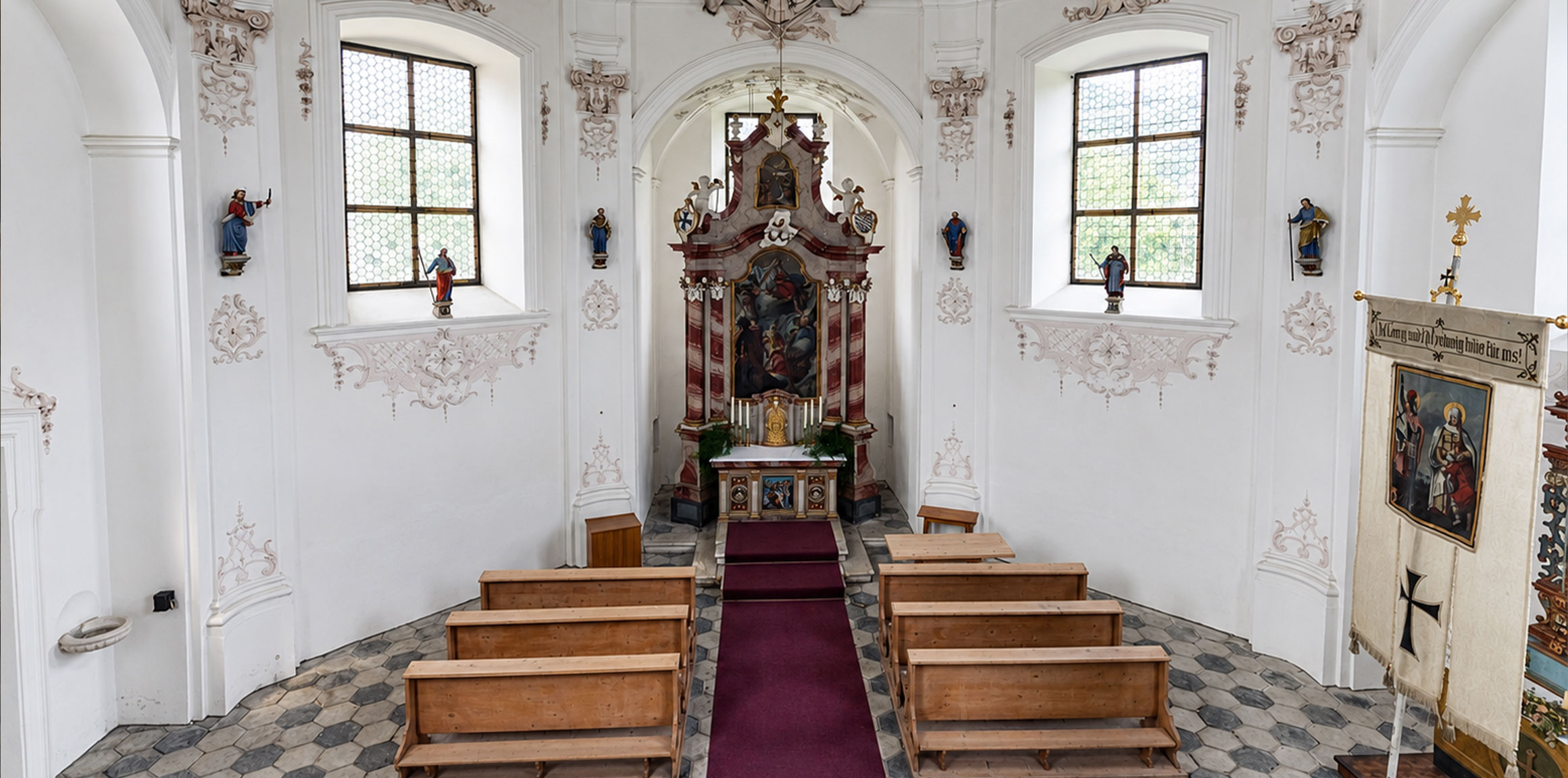
Inside, visitors encounter a bright and refined central space richly decorated in Late Baroque and Rococo style. The delicate stucco work, created by artists of the famous Wessobrunn school, is regarded as some of the finest Rococo decoration in South Tyrol and lends the church an atmosphere of lightness and elegance.
Especially noteworthy are the frescoes by the Augsburg painter Matthäus Günther, one of the leading Rococo artists of southern Germany. His paintings depict Saint Elisabeth and Saint George, the patron saints of the Teutonic Order, and create an impressive combination of spirituality and Baroque theatricality. The high altar painting is also one of his works.
An important Renaissance artwork can also be found in the side altar: a piece created by Georg Trabl in 1598. The church therefore unites artistic elements from different periods, ranging from the Renaissance to the Rococo era.
For centuries, the church was closely connected to the work of the Teutonic Order, whose members cared for pilgrims, travellers and the sick along the Brenner route. Together with the adjacent Teutonic Order House, it formed the religious and social centre of the Order’s community in Sterzing.
Today, St. Elisabeth Church can be visited as part of the Multscher and Town Museum. Surrounded by luminous frescoes, elaborate stucco decorations and the peaceful atmosphere of the central space, visitors can still sense the close connection between faith, art and history that defines this remarkable place.