Town of Sterzing - Historical Buildings
Centre of Trade, Politics and Civic Life
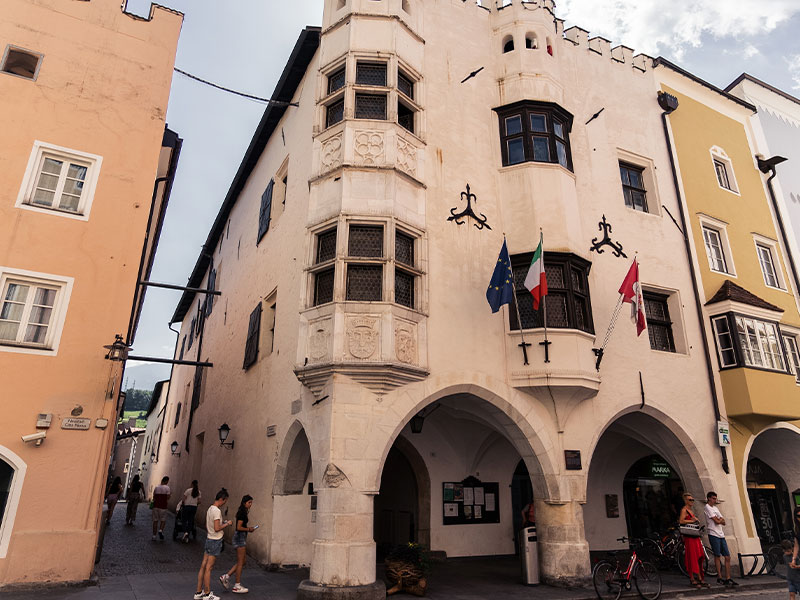
In the heart of today’s pedestrian zone stands the historic Town Hall of Sterzing, one of South Tyrol’s most important secular buildings and an impressive testimony to the city’s rich history. For centuries, this building served as the political, economic and social centre of the town.
In 1468, the mayor and town council purchased the building from the guardian of the Gerber children. Under the supervision of master builder Lienhard Jöchl, the interiors were redesigned between 1468 and 1473 according to plans by the renowned court artist Jörg Kölderer. The striking oriel window facing the street was completed in 1524. At the same time, the bread market and butcher’s market were established on the ground floor, reflecting the close relationship between trade and civic administration in medieval Sterzing.
Thanks to its strategic location along the Brenner route, Sterzing quickly developed into a prosperous trading town. Merchants, craftsmen and travellers from both northern and southern Europe met here. The Town Hall became a visible symbol of the city’s wealth and civic pride.
The spacious halls of the building were not only used for administration but also witnessed important historical events. During the Peasants’ Revolt of 1525, an emergency council convened here. Over the centuries, several sessions of the Tyrolean Parliament were held within these walls, and members of the imperial family – including Emperor Maximilian, King Philip of Spain, Archduke Ferdinand, Maria Theresa and Emperor Joseph II – were ceremoniously received here.
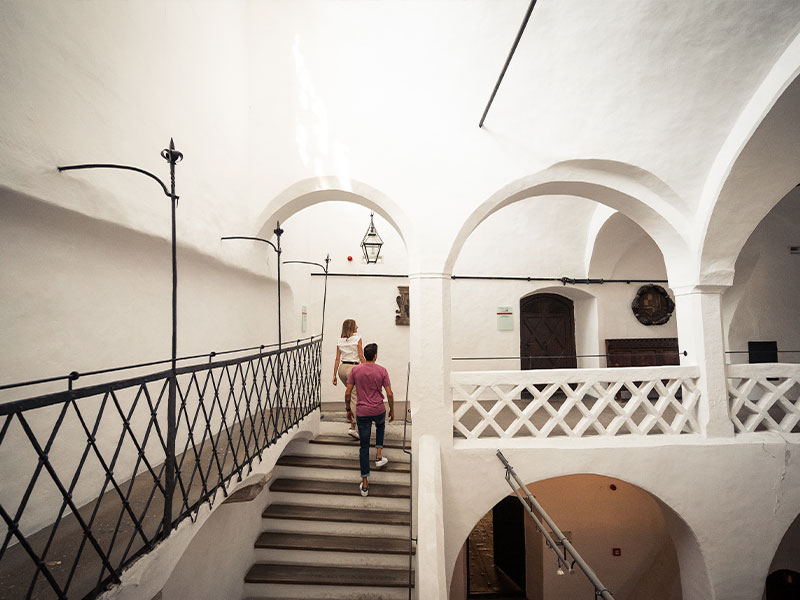
Particularly impressive is the vaulted inner courtyard on the first and second floors. Its restrained yet elegant architecture still conveys the dignity of a late Gothic civic building. Slender columns made of marble from Ratschings support the surrounding gallery with delicate Gothic tracery and ornamental details. Soft daylight entering through the large windows gives the courtyard a calm and refined atmosphere.
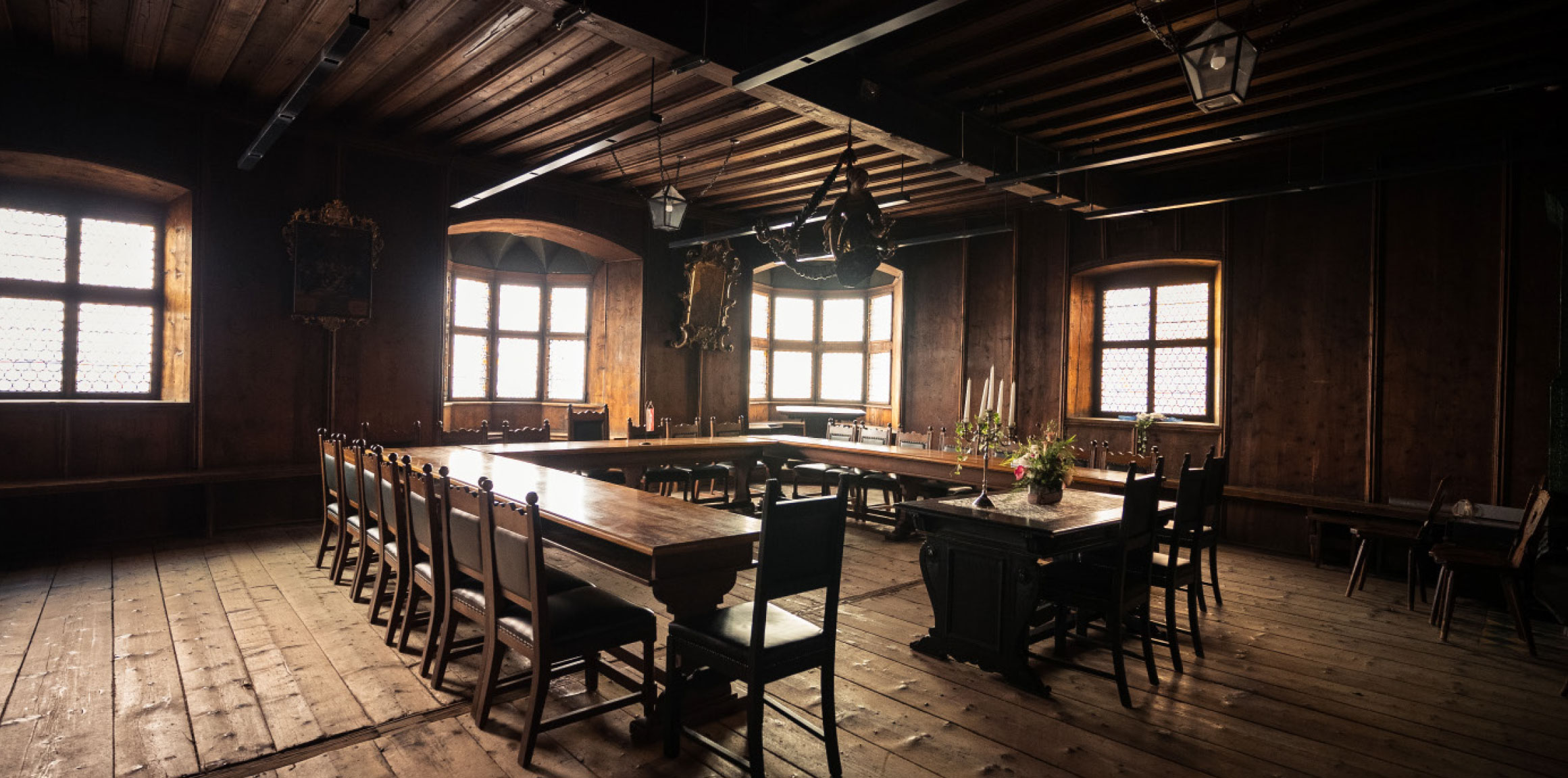
From here, visitors enter the historic Gothic council chamber, the most distinguished room in the building. Wood-panelled walls, surrounding benches, heavy timber beams and original leaded glass windows create a unique historical atmosphere. The large tiled stove from around 1600 was once the chamber’s only source of heating.
One of the chamber’s greatest artistic treasures is the famous “Lüsterweibchen” dating from 1525. The carved half-figure of Lucretia holds a chandelier in her left hand while pointing a dagger toward her chest with her right. The design originated from Jörg Kölderer, court painter to Emperor Maximilian I. Art historians believe the work was inspired by a depiction created by Albrecht Dürer for his famous work “The Triumph of Emperor Maximilian”. Today, the sculpture is regarded as one of Sterzing’s most remarkable examples of late Gothic art.
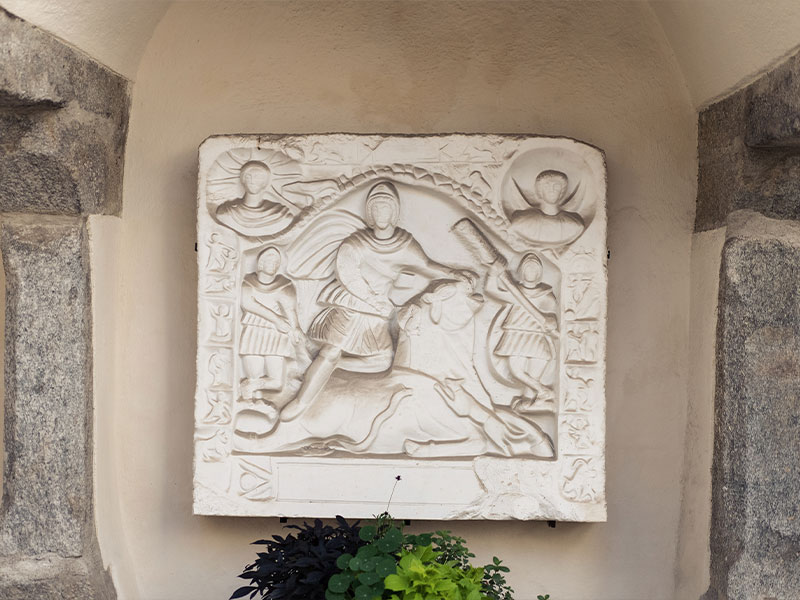
The Town Hall also preserves numerous historical artworks and memorials: richly decorated cabinets from the 17th century, epitaphs of noble Sterzing families, coats of arms, paintings and representations of Tyrolean rulers all bear witness to the city’s prosperous past.
To this day, the Town Hall continues to fulfil its original purpose: the municipal council of Sterzing still meets in the historic council chamber. In this way, the building uniquely connects past and present as a living symbol of the city’s history.