Stadt Sterzing - Historische Gebäude
Hospiz, Ordenssitz und kulturelles Zentrum Sterzings
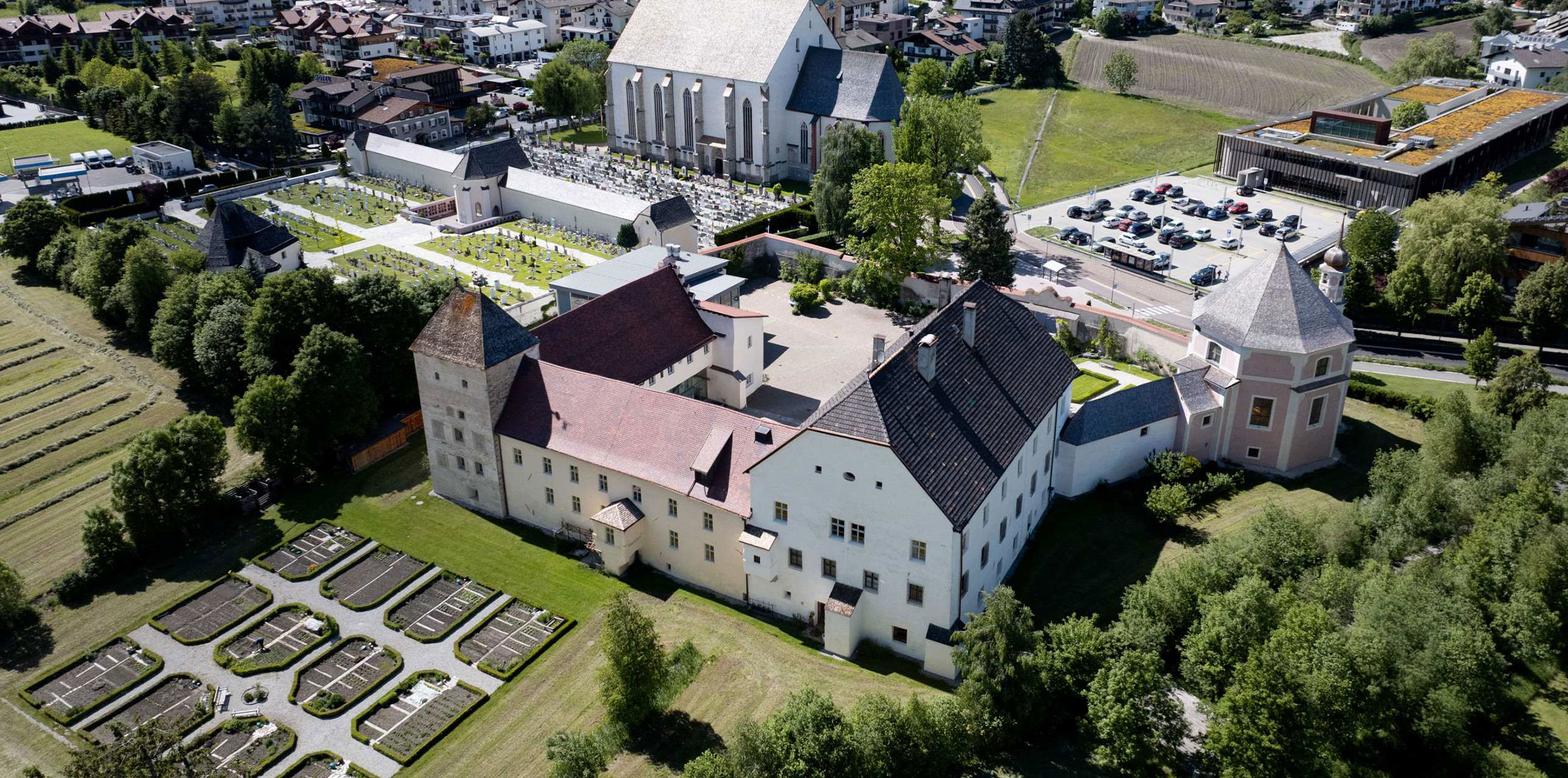
Unmittelbar neben der Pfarrkirche „Unsere Liebe Frau im Moos“ befindet sich das Deutschhaus des Deutschen Ordens – eine der geschichtsträchtigsten Anlagen Sterzings. Über Jahrhunderte hinweg war das Gebäude Hospiz, Ordenssitz, Krankenhaus und später kulturelles Zentrum der Stadt. Bis heute erzählt das weitläufige Bauensemble von der bedeutenden Rolle Sterzings entlang der alten Brennerroute.
Bereits im Jahr 1241 bestand an dieser Stelle ein Hospiz zur Betreuung von Pilgern, Reisenden und Kranken. 1254 wurde die Anlage dem Deutschen Orden übertragen, der hier eine sogenannte Kommende errichtete – einen regionalen Verwaltungssitz des Ordens. Der Deutsche Orden spielte entlang wichtiger Handels- und Pilgerwege eine bedeutende soziale und religiöse Rolle und sorgte für Unterkunft, Versorgung und Schutz der Reisenden.
Die verschiedenen Gebäudeteile des Deutschhauses entstanden über mehrere Jahrhunderte hinweg. Der Kern des Ostflügels reicht bis in die Mitte des 13. Jahrhunderts zurück. Im 14. Jahrhundert kamen der markante Südturm und weitere Erweiterungen hinzu. Während der zweiten Hälfte des 15. Jahrhunderts erhielt die Anlage ihre spätgotische Gestalt mit den charakteristischen Treppengiebeln und Innenhöfen. Im 18. Jahrhundert wurde das Gebäude schließlich teilweise barock umgestaltet und erhielt neue Fassaden.
Zwischen 1821 und 1884 befand sich das Deutschhaus im Besitz der Grafen von Thurn und Taxis. Anschließend diente die Anlage über nahezu ein Jahrhundert hinweg als Stadtspital und später als Bezirkskrankenhaus. Damit blieb das Gebäude seinem ursprünglichen Zweck als Ort der Fürsorge und Betreuung über viele Jahrhunderte treu.
Heute beherbergt das sorgfältig restaurierte Deutschhaus mehrere bedeutende kulturelle Einrichtungen der Stadt, darunter die Musikschule, die Bürgerkapelle sowie das Stadt- und Multschermuseum.
Besonders bedeutend ist das Multschermuseum, das sich in den historischen Räumen des Deutschhauses befindet. Es widmet sich dem berühmten spätgotischen Künstler Hans Multscher und bewahrt die erhaltenen Teile des zwischen 1456 und 1459 geschaffenen Multscher-Altars der Pfarrkirche „Unsere Liebe Frau im Moos“. Der Altar gilt als eines der bedeutendsten Kunstwerke der Spätgotik im süddeutschen Raum und markiert den Übergang von der mittelalterlichen Kunst zur frühen Renaissance. Die ausdrucksstarken Figuren und fein gearbeiteten Altartafeln vermitteln bis heute eindrucksvoll die hohe Kunstfertigkeit jener Zeit.
Neben dem Multscher-Altar zeigt das Museum zahlreiche weitere Zeugnisse der Sterzinger Stadtgeschichte, sakrale Kunstwerke sowie Objekte aus der Zeit des Bergbaus und Handels. Dadurch verbindet das Deutschhaus auf einzigartige Weise religiöse Geschichte, Kunst, Fürsorge und städtische Kultur.
Das Deutschhaus des Deutschen Ordens zählt heute zu den wichtigsten historischen Bauwerken Sterzings. Seine Mauern erzählen von mittelalterlichen Pilgern, vom Wirken des Deutschen Ordens, von Krankheit und Heilung, von Kunst und Kultur – und von der jahrhundertelangen Bedeutung Sterzings als Brücke zwischen Nord und Süd Europas.
Italiano
Antica Commenda dell’Ordine Teutonico
Ospizio, sede dell’Ordine e centro culturale di Vipiteno
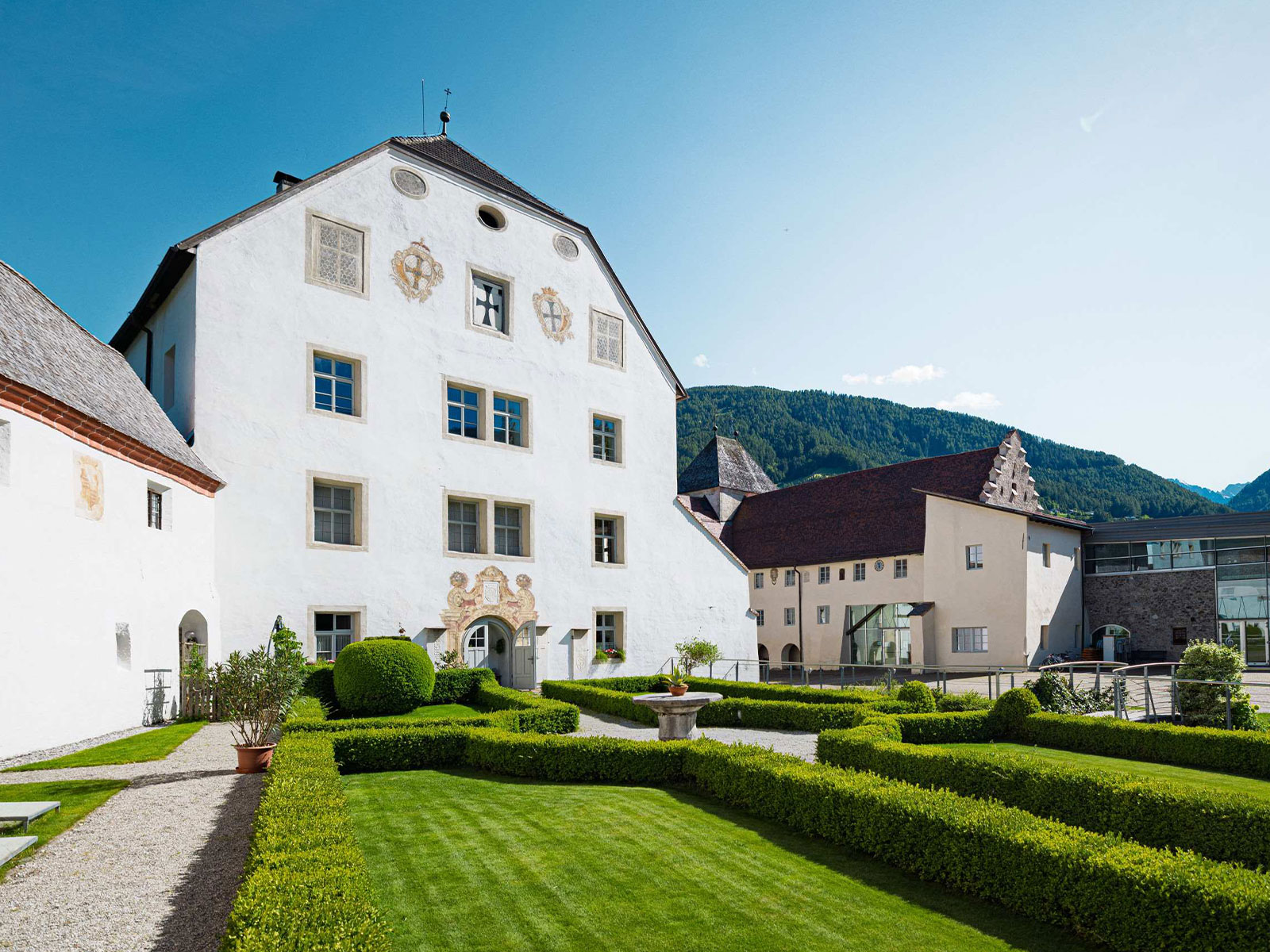
Accanto alla chiesa parrocchiale “Nostra Signora della Palude” si trova l’Antica Commenda dell’Ordine Teutonico, uno dei complessi storici più importanti di Vipiteno. Nel corso dei secoli questo edificio fu ospizio, sede dell’Ordine, ospedale e successivamente centro culturale della città. Ancora oggi il complesso racconta il ruolo fondamentale che Vipiteno ebbe lungo l’antica via del Brennero.
Già nel 1241 esisteva in questo luogo un ospizio destinato all’assistenza di pellegrini, viaggiatori e malati. Nel 1254 l’edificio passò all’Ordine Teutonico, che vi istituì una “commenda”, ovvero una sede amministrativa regionale dell’Ordine. L’Ordine Teutonico svolgeva lungo le grandi vie commerciali e di pellegrinaggio un’importante funzione religiosa e sociale, offrendo protezione, assistenza e ospitalità ai viandanti.
Le diverse parti dell’edificio furono costruite nel corso dei secoli. Il nucleo dell’ala orientale risale alla metà del XIII secolo. Nel XIV secolo furono aggiunti la torre meridionale e ulteriori ampliamenti. Nella seconda metà del XV secolo il complesso assunse l’aspetto tardogotico che ancora oggi lo caratterizza, con i suoi frontoni a gradoni e i cortili interni. Nel XVIII secolo parte della struttura venne rinnovata in stile barocco con nuove facciate.
Tra il 1821 e il 1884 il Deutschhaus appartenne ai conti Thurn und Taxis. Successivamente l’edificio ospitò per quasi un secolo l’ospedale cittadino e poi l’ospedale distrettuale, mantenendo così la propria funzione originaria di luogo di assistenza e cura.
Oggi il complesso, restaurato con grande attenzione, ospita importanti istituzioni culturali della città, tra cui la scuola di musica, la banda cittadina e il Museo Civico e Multscher.
Particolarmente importante è il Museo Multscher, allestito negli storici ambienti del Deutschhaus. Il museo è dedicato al celebre artista tardogotico Hans Multscher e conserva le parti superstiti del famoso Altare di Multscher, realizzato tra il 1456 e il 1459 per la chiesa parrocchiale “Nostra Signora della Palude”. L’opera è considerata uno dei più importanti capolavori della tarda arte gotica nell’area sudtirolese e segna il passaggio dall’arte medievale al primo Rinascimento. Le figure scolpite e le tavole dipinte mostrano ancora oggi la straordinaria maestria artistica dell’epoca.
Oltre all’altare, il museo espone numerose testimonianze della storia cittadina di Vipiteno, opere d’arte sacra e oggetti legati alla tradizione mineraria e commerciale della città. Il Deutschhaus unisce così in modo unico storia religiosa, arte, assistenza e cultura urbana.
Ancora oggi l’Antica Commenda dell’Ordine Teutonico è uno dei monumenti storici più importanti di Vipiteno. Le sue mura raccontano di pellegrini medievali, dell’opera dell’Ordine Teutonico, di cura e ospitalità, di arte e cultura, ma anche del ruolo storico di Vipiteno come ponte tra il nord e il sud dell’Europa.
The Teutonic Order House
Hospice, Religious Seat and Cultural Centre of Sterzing
Beside the Parish Church “Our Lady in the Moor” stands the historic Teutonic Order House, one of Sterzing’s most significant historical complexes. Over the centuries, the building served as a hospice, a seat of the Teutonic Order, a hospital and later as an important cultural centre of the town. Even today, the complex reflects Sterzing’s historical importance along the ancient Brenner route.
A hospice for pilgrims, travellers and the sick already existed here in 1241. In 1254, the property was transferred to the Teutonic Order, which established a regional administrative seat, known as a commandery, within the complex. Along the major trade and pilgrimage routes, the Teutonic Order played an important religious and social role by offering shelter, care and protection to travellers.
The different parts of the building were constructed over several centuries. The core of the eastern wing dates back to the mid-13th century. In the 14th century, the southern tower and additional structures were added. During the second half of the 15th century, the complex received its characteristic Late Gothic appearance with stepped gables and inner courtyards. In the 18th century, parts of the building were redesigned in Baroque style with new façades.
Between 1821 and 1884, the building belonged to the Counts of Thurn and Taxis. Afterwards, it served for almost a century as the town hospital and later as the district hospital, thus continuing its original role as a place of care and assistance.
Today, the carefully restored complex houses several important cultural institutions of Sterzing, including the music school, the town orchestra and the Multscher and Town Museum.
Particularly important is the Multscher Museum, located within the historic rooms of the Teutonic Order House. The museum is dedicated to the famous Late Gothic artist Hans Multscher and preserves the surviving parts of the renowned Multscher Altarpiece, created between 1456 and 1459 for the Parish Church “Our Lady in the Moor”. The altarpiece is regarded as one of the most important works of Late Gothic art in the South Tyrolean region and marks the transition from medieval art to the early Renaissance. Its expressive sculptures and painted panels still demonstrate the remarkable artistic mastery of that era.
In addition to the altarpiece, the museum presents numerous exhibits related to Sterzing’s town history, sacred art and the region’s mining and trading traditions. In this way, the Teutonic Order House uniquely combines religious history, art, social care and urban culture.
Today, the Teutonic Order House remains one of Sterzing’s most important historical landmarks. Its walls tell the story of medieval pilgrims, the work of the Teutonic Order, centuries of care and hospitality, as well as the artistic and cultural heritage that shaped Sterzing as a bridge between northern and southern Europe.