A Place of Care, Faith and Remarkable Gothic Frescoes
In the heart of Sterzing’s old town stands the former civic hospital together with the Church of the Holy Spirit, a complex that for centuries was closely connected to the town’s social life. Here, the poor, the sick, pilgrims and travellers found shelter and care. At the same time, the church became an important centre of religious devotion and Late Gothic art.
In 1399, the citizens of Sterzing acquired the building in order to establish a “future hospital”. The Late Gothic structure served as a hospital for the poor until 1885 and reflected the strong sense of charity and civic responsibility within the prosperous town. Later, the building housed a school as well as the local tourism association.
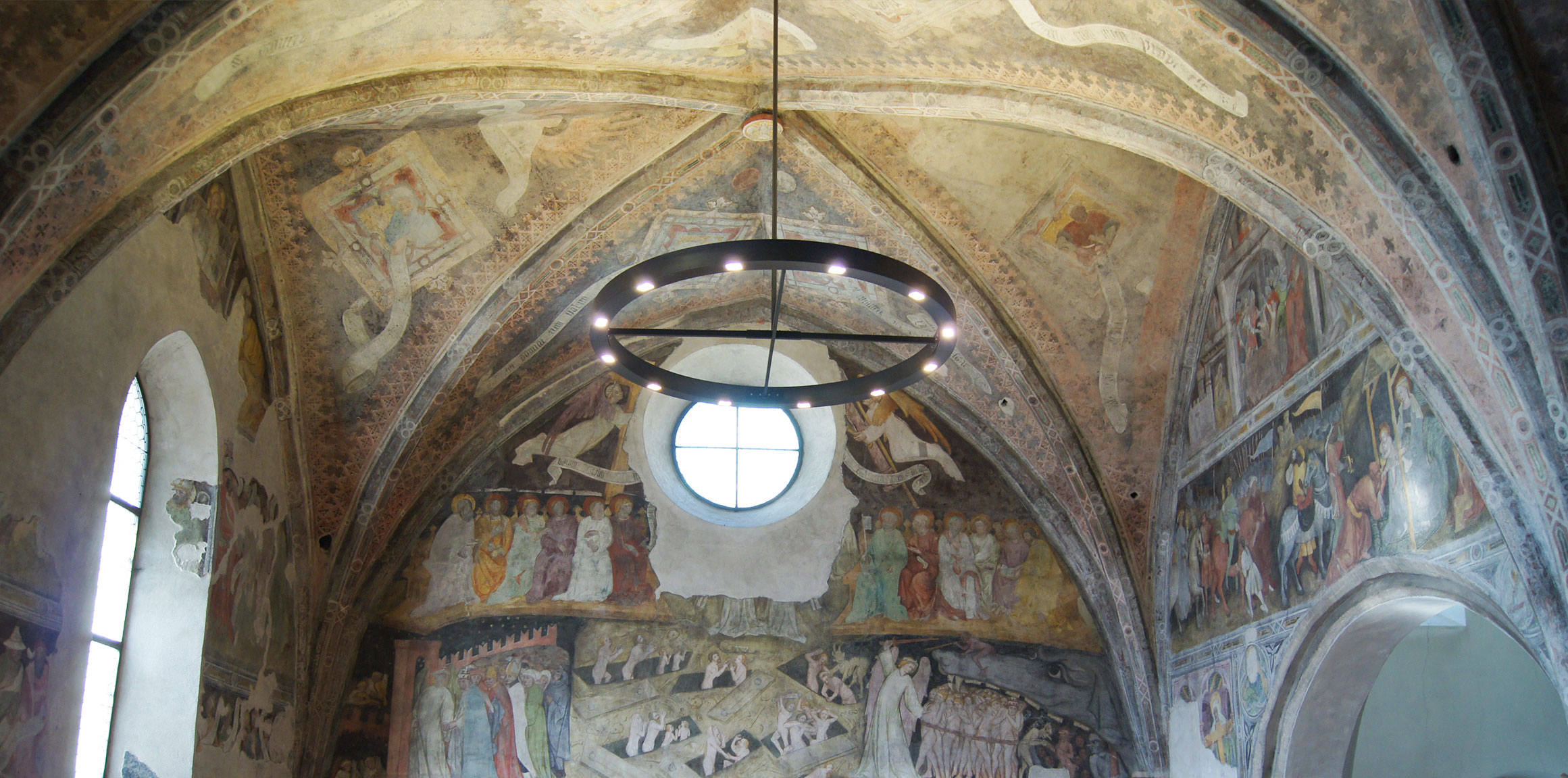
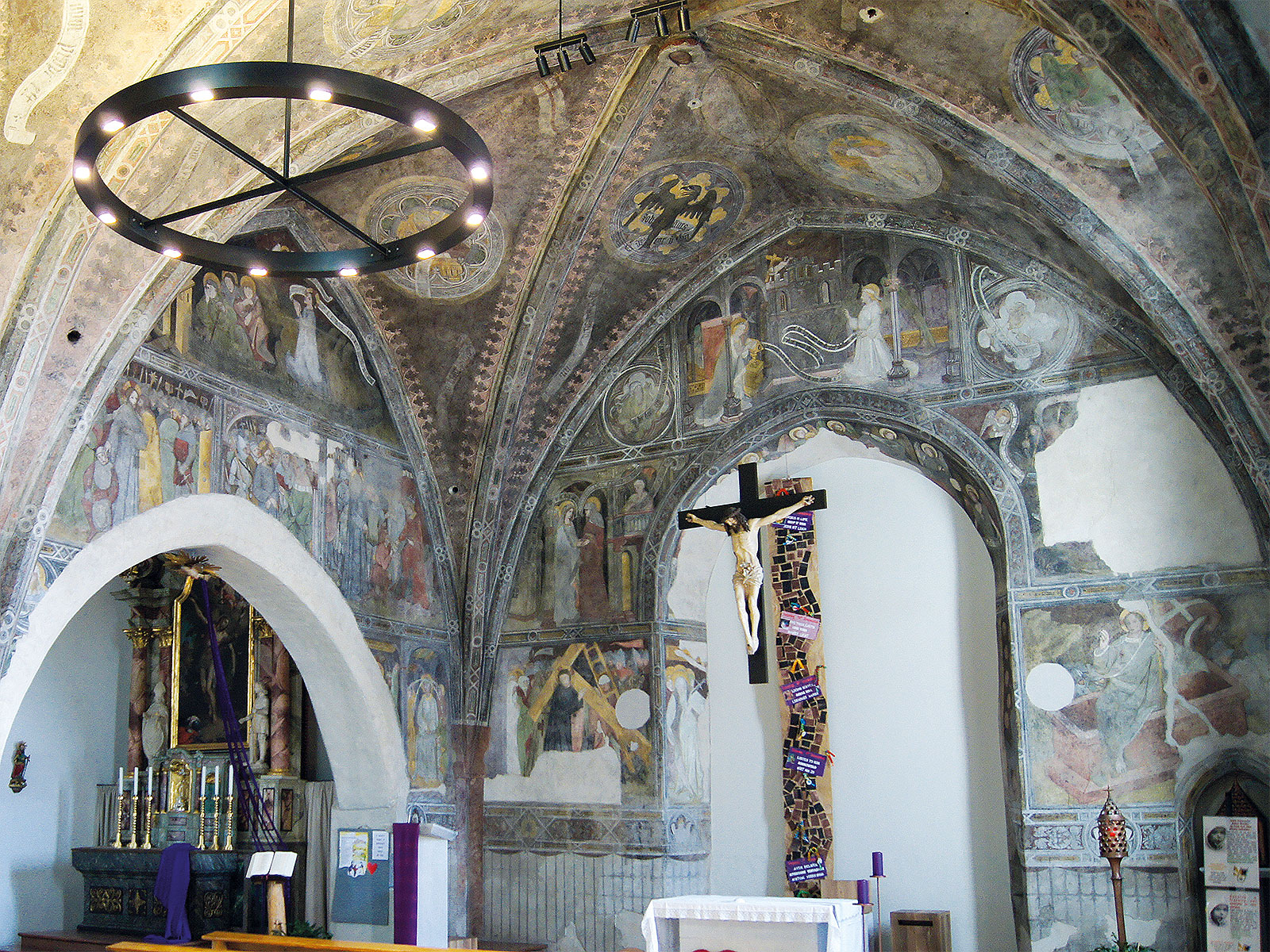
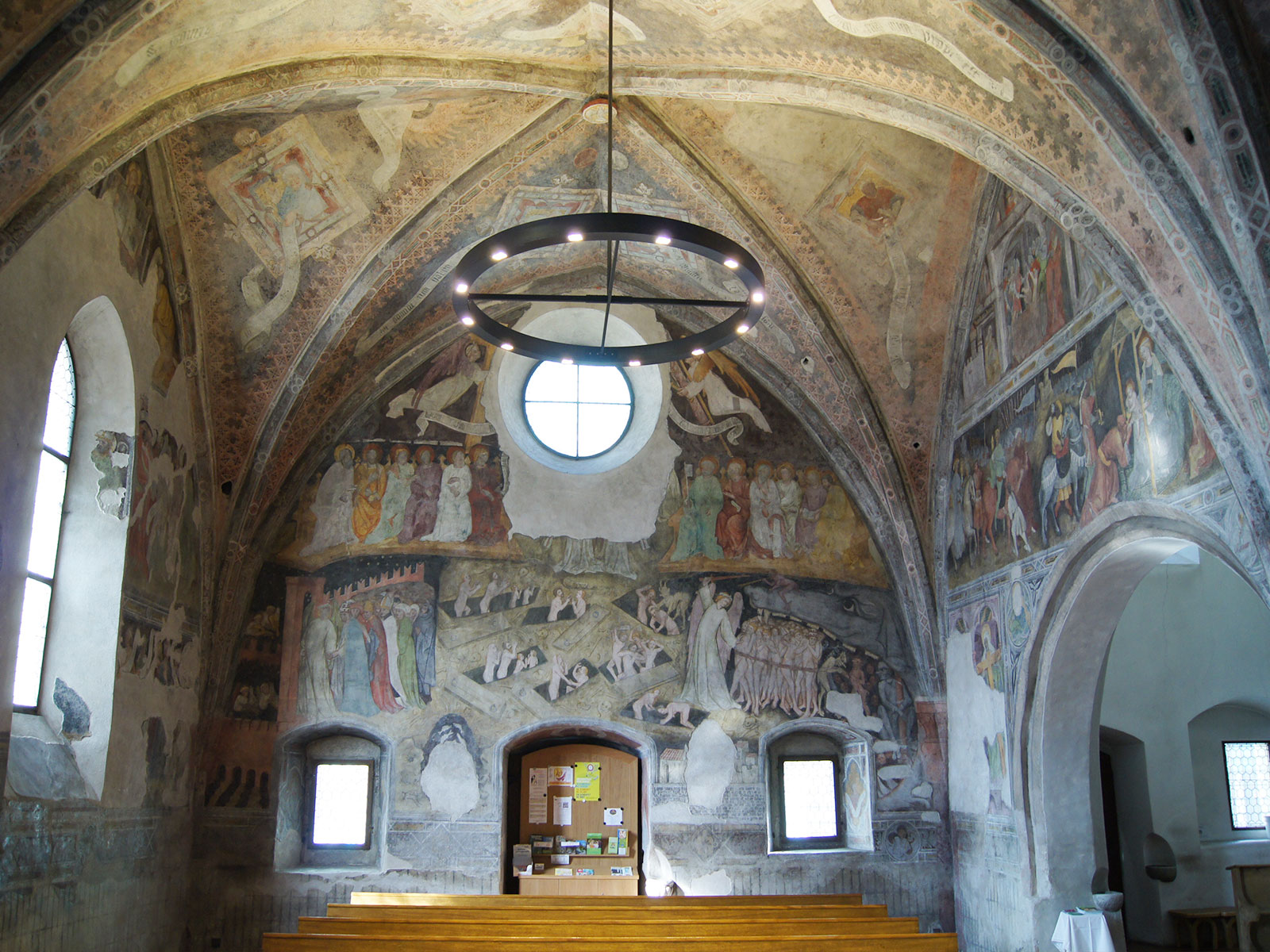
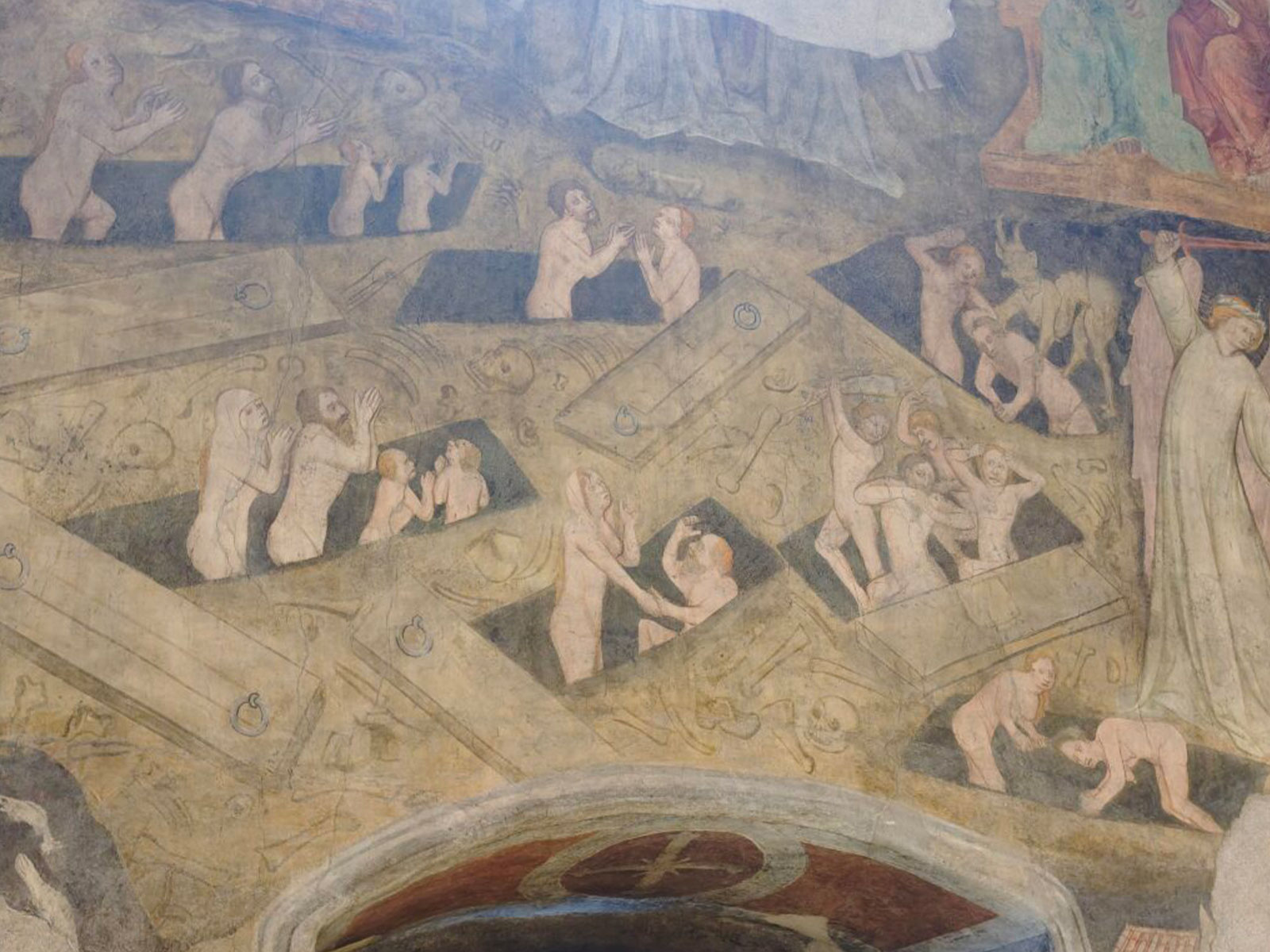
Particularly important are the frescoes inside the Church of the Holy Spirit, created between 1400 and 1415. These wall paintings are considered among the most significant Gothic fresco cycles in the Wipptal valley and are attributed to the painter Hans of Bruneck. With remarkable expressiveness, they depict biblical scenes and religious themes while also offering a rare insight into the spiritual world and artistic language of medieval Tyrol.
The frescoes impress not only because of their artistic quality but also due to their exceptional state of preservation. Despite their age, many colours and details remain clearly visible today. Especially the delicate facial features, flowing garments and ornamental decorations demonstrate the high level of Late Gothic craftsmanship.
Another important artistic treasure can be found in the sanctuary of the church: the impressive wooden crucifix. The expressive depiction of the crucified Christ conveys the deep spirituality and religious symbolism of the period. Together with the frescoes, the crucifix shapes the quiet and solemn atmosphere of the church interior.
The Church of the Holy Spirit still reminds visitors today that Sterzing was not only a centre of trade and administration, but also a place of charity, social care and religious life. Surrounded by frescoes, the altar space and ancient walls, the medieval history of the town can still be strongly felt today.