Stadt Sterzing - Historische Gebäude
Historisches Traditionshaus am Sterzinger Stadtplatz
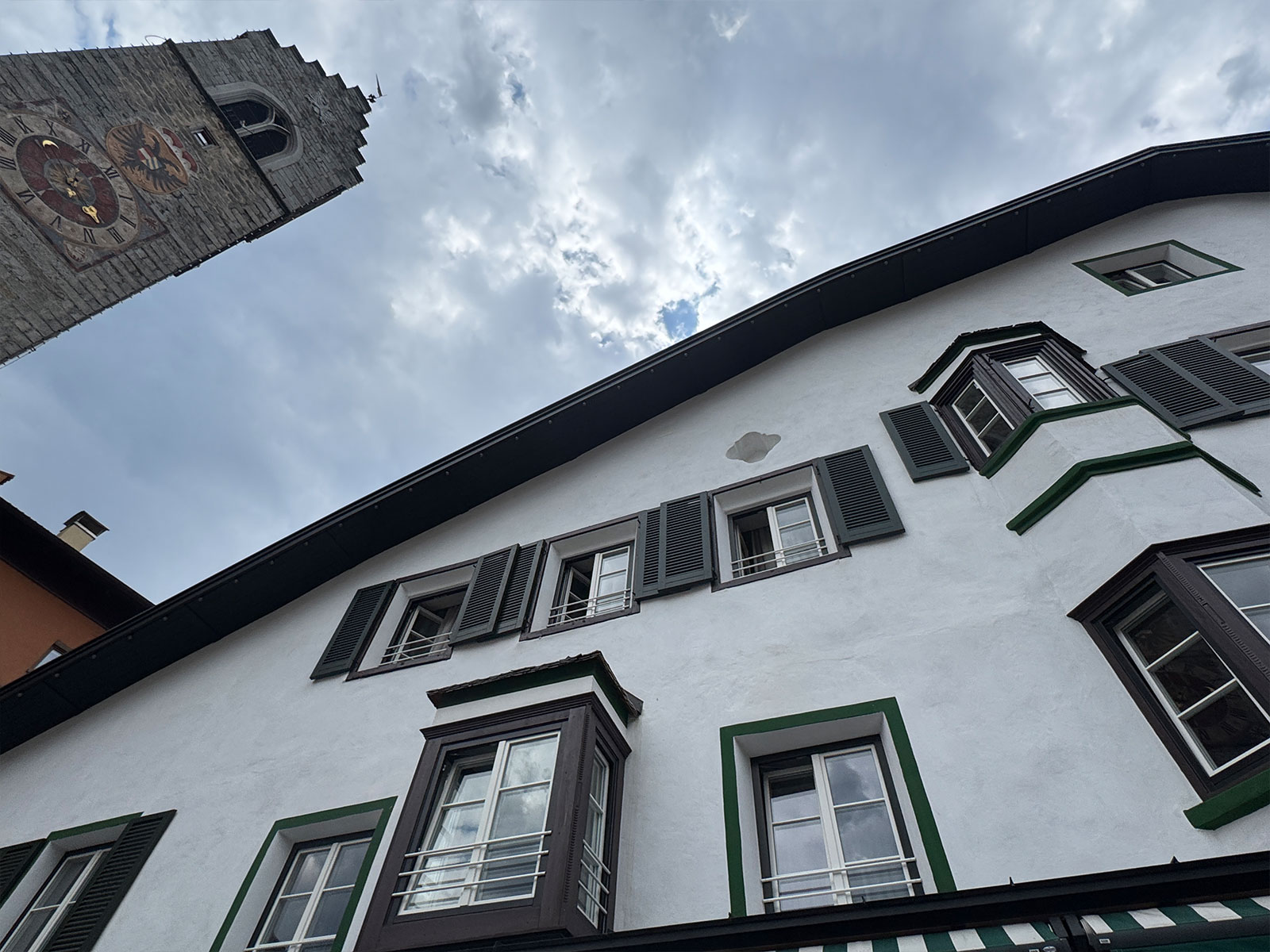
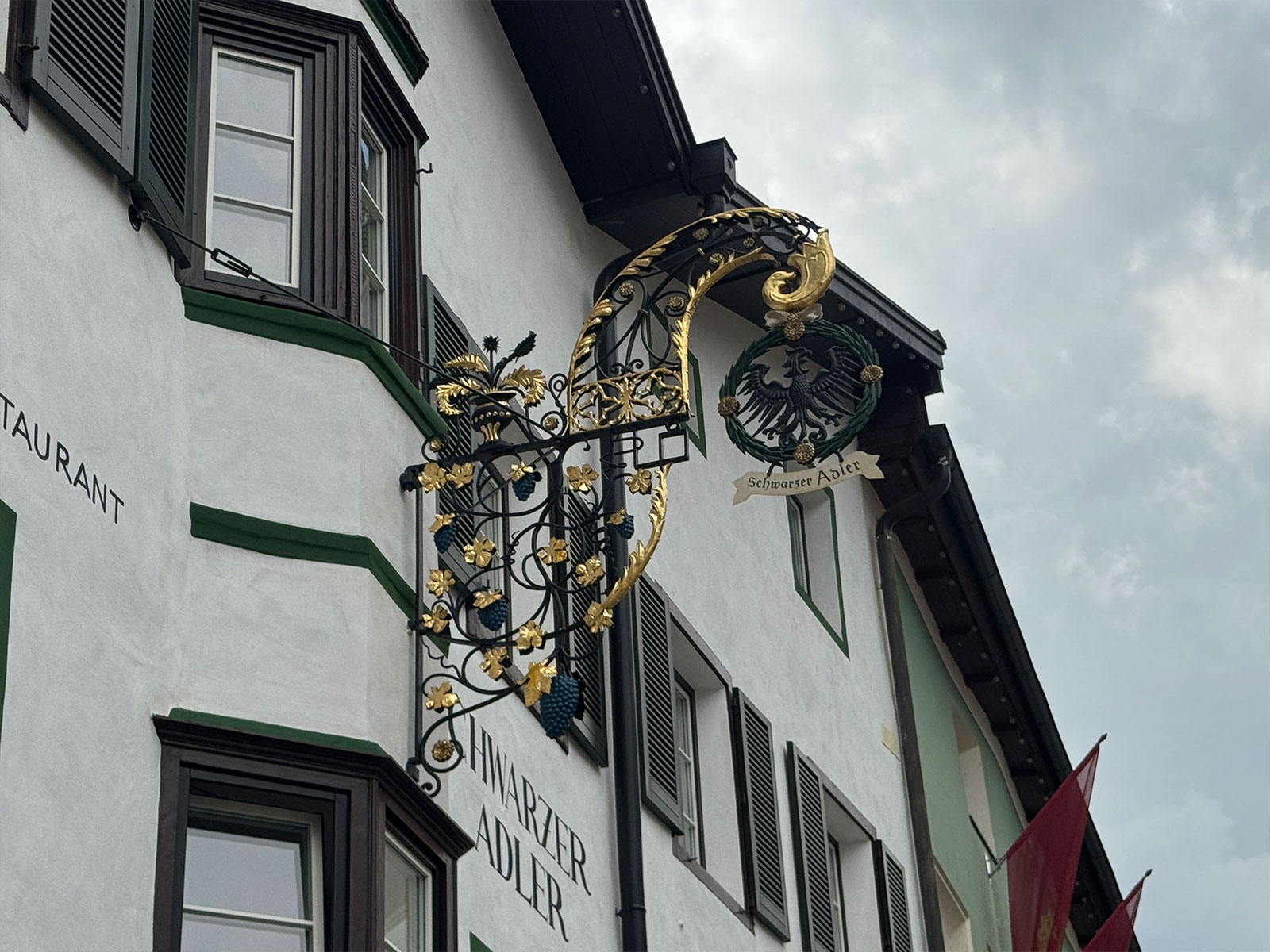
Das Gasthaus „Zum Schwarzen Adler“ zählt zu den ältesten und traditionsreichsten Gasthäusern Sterzings. Das weitläufige Gebäude entstand aus der Verbindung von ursprünglich vier einzelnen Häusern und entwickelte sich über Jahrhunderte hinweg zu einem bedeutenden Treffpunkt für Händler, Reisende und Bürger der Stadt. Seine Lage direkt am Stadtplatz machte den Gasthof zu einem wichtigen Ort entlang der historischen Brennerroute.
Das Hauptgebäude wurde gegen Ende des 15. Jahrhunderts von Andre Zymerman umgestaltet. Noch heute erinnern einzelne Bauteile an diese spätgotische Bauphase, darunter die mächtigen Tragbalken in der historischen Gaststube aus dem Jahr 1498. Sie zählen zu den ältesten erhaltenen Holzelementen des Hauses und verweisen auf die lange Geschichte des Gebäudes.
Zu den berühmtesten Gästen des Hauses gehörte der Arzt und Naturforscher Paracelsus von Hohenheim. Im Jahr 1534 hielt er sich in Sterzing auf und widmete dem Stadtrat ein sogenanntes „Pestbüchlein“, eine Schrift über den Umgang mit Seuchen und Krankheiten. Dadurch wurde das Gasthaus auch mit der Geschichte der frühen Medizin und Wissenschaft verbunden.
Im Erdgeschoss der historischen Weinschenke befinden sich Fresken des Südtiroler Künstlers Albert Stolz aus dem Jahr 1938. Die Wandmalereien verleihen den Räumen bis heute eine besondere Atmosphäre und verbinden die lange Geschichte des Hauses mit der Kunst des 20. Jahrhunderts.
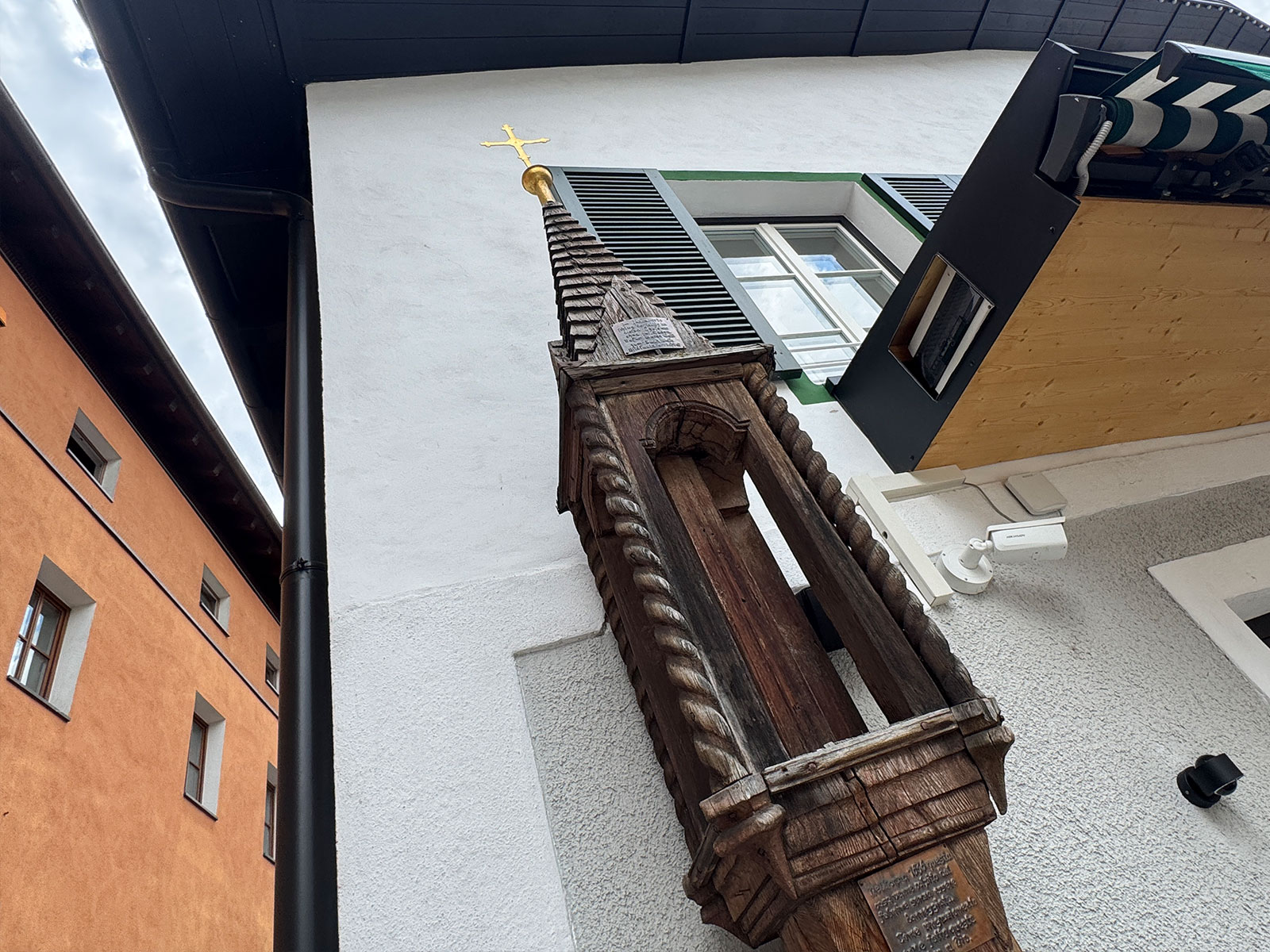
Besonders bemerkenswert ist die historische Holzsäule an der Außenseite des Gebäudes. Sie wurde der Überlieferung nach zum Gedenken an einen Blitzschlag angebracht, bei dem das Haus vor größerem Schaden bewahrt geblieben sein soll. Die Säule gilt als Zeichen des Dankes und des Schutzes und erinnert an den tief verwurzelten Glauben und die Frömmigkeit vergangener Jahrhunderte. Solche Schutzzeichen waren in Tirol weit verbreitet und sollten Häuser und Bewohner vor Unglück bewahren.
Über Jahrhunderte hinweg war der „Schwarze Adler“ ein Ort der Begegnung. Händler aus dem Norden und Süden Europas, Bergwerksunternehmer, Reisende und Bürger kehrten hier ein, tauschten Nachrichten aus und machten den Gasthof zu einem lebendigen Mittelpunkt des städtischen Lebens.
Bis heute erinnert das Gebäude an die große Zeit Sterzings als Handels- und Bergbaustadt. Zwischen spätgotischen Mauern, historischen Stuben und alten Symbolen erzählt der „Schwarze Adler“ von Gastfreundschaft, Handel und der bewegten Geschichte der Stadt.
Italiano
Albergo “All’Aquila Nera”
Storica locanda sulla piazza di Vipiteno
L’albergo “All’Aquila Nera” è una delle locande storiche più antiche e prestigiose di Vipiteno. Il vasto edificio nacque dall’unione di quattro case separate e nel corso dei secoli divenne un importante punto d’incontro per mercanti, viaggiatori e cittadini. La sua posizione direttamente sulla piazza principale lo rese una tappa fondamentale lungo la storica via del Brennero.
Alla fine del XV secolo l’edificio principale venne ristrutturato da Andre Zymerman. Ancora oggi alcuni elementi architettonici ricordano questa fase tardogotica, in particolare le grandi travi lignee della storica stube risalenti al 1498, tra gli elementi lignei più antichi conservati nell’edificio.
Tra gli ospiti più celebri della locanda vi fu il medico e naturalista Paracelso di Hohenheim. Nel 1534 soggiornò a Vipiteno e dedicò al consiglio cittadino un “libretto sulla peste”, testo dedicato alla prevenzione e alla cura delle epidemie. L’edificio è quindi legato anche alla storia della medicina e della scienza europea.
Al piano terra dell’antica osteria si trovano affreschi dell’artista altoatesino Albert Stolz realizzati nel 1938. Le pitture murali conferiscono ancora oggi agli ambienti un’atmosfera particolare, unendo la lunga storia della locanda all’arte del Novecento.
Particolarmente interessante è la storica colonna lignea collocata sulla facciata dell’edificio. Secondo la tradizione, essa venne installata come ricordo di un fulmine che colpì la casa senza provocare gravi danni. La colonna rappresenta quindi un simbolo di protezione e gratitudine e testimonia la profonda religiosità popolare del passato. In Tirolo questi segni protettivi erano molto diffusi e avevano la funzione di proteggere le abitazioni dalle sciagure.
Per secoli l’“Aquila Nera” fu luogo d’incontro tra nord e sud dell’Europa. Mercanti, imprenditori minerari, viaggiatori e cittadini si fermavano qui per mangiare, riposare e scambiare notizie, rendendo la locanda uno dei centri più vivi della città.
Ancora oggi l’edificio ricorda il periodo di massimo splendore di Vipiteno come città commerciale e mineraria. Tra mura tardogotiche, antiche sale e simboli storici, l’“Aquila Nera” racconta una storia di ospitalità, commercio e vita cittadina.
English
Inn “Zum Schwarzen Adler”
Historic Inn on Sterzing’s Town Square
The inn “Zum Schwarzen Adler” is one of the oldest and most traditional inns in Sterzing. The large building developed from the merging of four separate houses and over the centuries became an important meeting place for merchants, travellers and townspeople. Its location directly on the main square made it a significant stop along the historic Brenner route.
The main building was redesigned at the end of the 15th century by Andre Zymerman. Several architectural details still recall this Late Gothic phase, including the massive wooden beams in the historic dining room dating from 1498, among the oldest preserved wooden elements in the house.
One of the most famous guests of the inn was the physician and scholar Paracelsus of Hohenheim. In 1534 he stayed in Sterzing and dedicated a “plague booklet” to the town council, a treatise dealing with disease and epidemics. The inn therefore also holds a place in the history of early medicine and science.
In the ground-floor wine tavern, visitors can still see frescoes painted in 1938 by the South Tyrolean artist Albert Stolz. These murals continue to shape the atmosphere of the rooms and connect the long history of the building with 20th-century art.
Particularly remarkable is the historic wooden column attached to the outside of the building. According to tradition, it was erected in memory of a lightning strike from which the house was miraculously spared major damage. The column became a symbol of gratitude and protection and reflects the deep religious beliefs of earlier centuries. Such protective symbols were common throughout Tyrol and were intended to safeguard houses and their inhabitants from misfortune.
For centuries, the “Black Eagle” served as a lively meeting point between northern and southern Europe. Merchants, mining entrepreneurs, travellers and local citizens gathered here to eat, rest and exchange news, making the inn an important centre of urban life.
Today, the building still recalls Sterzing’s great era as a trading and mining town. Between Late Gothic walls, historic parlours and ancient symbols, the “Black Eagle” tells a story of hospitality, commerce and the vibrant history of the town.